
Trace Past Jeff Davis Owners
A backward chain starts with the most recent reliable conveyance. That deed's grantee holds the interest now. Turn the grantor's name into the next grantee search and step back again. Dates, legal descriptions, and prior-deed references keep the chain tied to one tract. They stay useful even when names or addresses change.
| Search stage | Time span | Record keeper | Ownership clue |
|---|---|---|---|
| Online name index | Displayed from 1990 | GSCCCA | Grantor, grantee, deed type and reference |
| Older deed books | Before online window | Clerk of Superior Court | Earlier conveyances and legal descriptions |
| Historic plats | Varies by book | Clerk and GSCCCA Plat Index | Lot, block, caption and tract changes |
| Predecessor books | Before county creation in 1905 | Appling and Coffee counties | Pre-Jeff Davis ownership links |
The published indexes carry no sample chain here. Actual names and book numbers come from official records. Start with GSCCCA for a recent chain, then carry the last party and tract clue to the courthouse deed books.
Reconstruct Jeff Davis Ownership Backward
The GSCCCA name search shows role and county controls. Set Grantee and Jeff Davis. Find the newest acquisition tied to the parcel's legal description, then search that deed's grantor as a grantee in an earlier date range. The GSCCCA real-estate search form displays the party, name, and date limits that launch a backward deed chain.
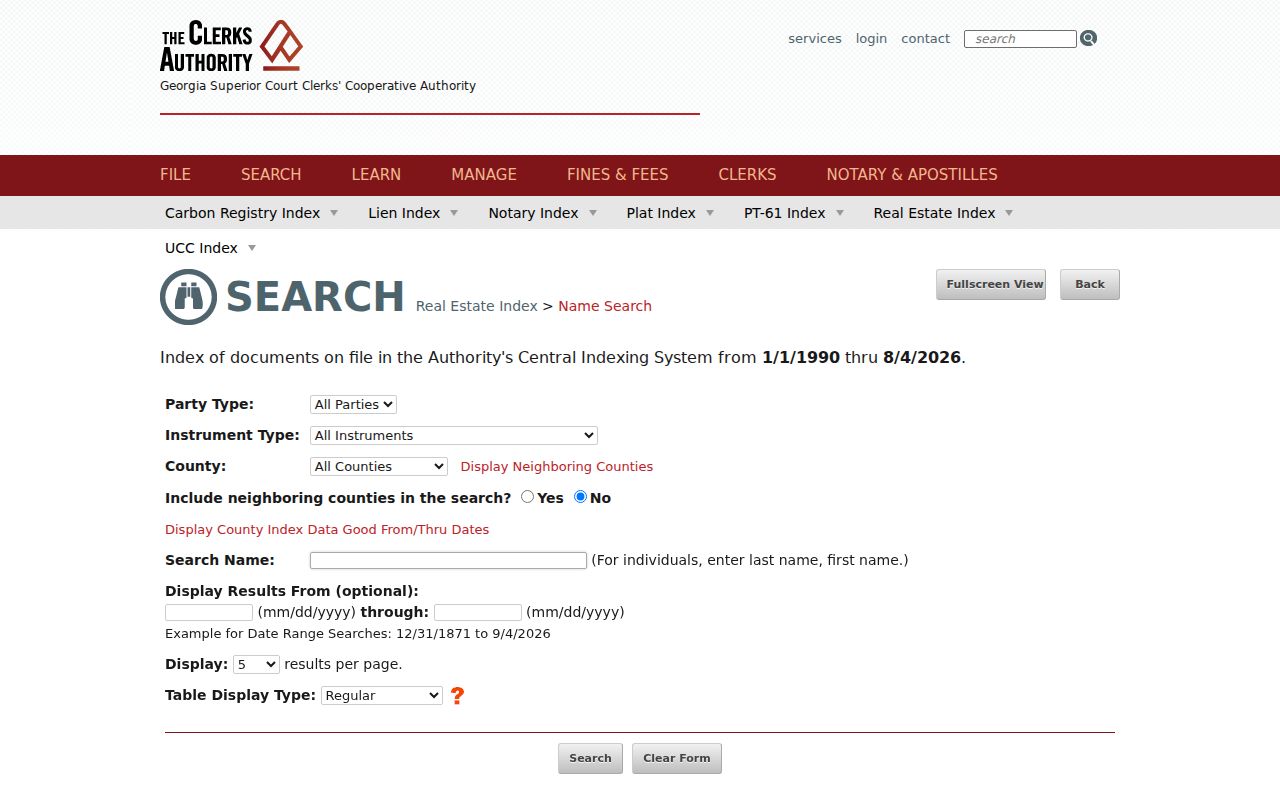
Filters cover party role, instrument type, county, name, and dates. Even so, every result must be matched to the land description before it joins the chain.
- Save the newest deed date, parties, instrument type, reference, and legal-description terms.
- Search the grantor as an earlier grantee, trying initials, entity suffixes, estate styles, and former names.
- Compare land lot, district, acreage, roads, lot/block, adjoining owners, exceptions, and prior-deed references.
- Repeat to the web cutoff, then continue through the Clerk's direct and reverse book indexes.
- Grantor
- The party conveying an interest.
- Grantee
- The party receiving an interest.
- Chain of title
- The linked conveyances for the same land.
- Reverse index
- An index organized by grantee, useful for acquisition deeds.
- Legal description
- The written land identity that survives address changes.
A simple sale chain can hide surprises. Quitclaims, corrections, estate deeds, foreclosures, sheriff's deeds, and tax sales each change how title moved, so read the full instrument because the index row only points to what was recorded.
Past Owners Before Jeff Davis
Jeff Davis County was created in 1905. Appling and Coffee Counties gave up land to form it. Any pre-1905 deed probably sits in a predecessor book. Carry the last owner's name, district, land lot, acreage, road, creek, and adjoining-owner calls. Run those terms into both counties' searches. Keep the historic and present county names in your notes. The FamilySearch Georgia wills and deeds collection may surface a name or image lead. The county-held record stays primary, and coverage there must be checked.
Decode Old Jeff Davis Land Clues
Old Jeff Davis deeds often name no street number. Timber tracts, rail corridors, creeks, and mill sites did the locating instead. Hazlehurst records may point to the depot, the Georgia and Florida Railway, Tallahassee Street, Old Mims Warehouse, or Hazlehurst Mills. Those calls read like landmarks.
The digitized January 14, 1926 Hazlehurst News carries estate, sale, road, and business-name clues. A notice can yield spellings and dates. It never proves a transfer of ownership.
Note: A railroad or landmark call can focus the search, but only the deed's legal description governs.
Follow Jeff Davis Tract Changes
Chains break in quiet ways. A parent tract splits, lots merge, or a subdivision plat replaces the acreage description. The GSCCCA Plat Index searches captions, dates, and parties. Lot, block, surveyor, developer, and adjoining-owner clues can bridge an older tract to a current parcel. Book and page numbers help too.
Estate transfers cause another jump. Search the decedent and fiduciary names, estate deeds, and court orders. Probate explains who held authority or inherited. The later deed shows what was actually recorded against the land.
Search Jeff Davis Estate Owners
A death interrupts the warranty-deed sequence. The next owner may arrive through probate instead. Search the decedent, executor, administrator, and trust-style name variants in the deed index. Instrument choices include estate documentation, deeds from an estate, court orders, and later conveyances by heirs.
Probate records supply authority and relationship clues. They never replace the recorded land instrument. Georgia birth and death records carry requester limits. Use a cemetery or obituary result only as a lead, then match names and dates to the probate and deed trail.
Reach Older Jeff Davis Records
The counter still matters. Online indexes eventually stop. Then courthouse deed books take over. Call the Clerk at (912) 375-6615 with the last party, year, and reference, and try the Jeff Davis Public Library at 189 East Jarman Street in Hazlehurst for local newspapers, histories, cemetery sources, and genealogy clues.
For a record that exists but is not posted, send a precise county open-records request. List parcel ID, names, dates, record type, and format. Georgia law does not require an office to build a custom history or settle a title question.
Limits on Jeff Davis Past Owners
The GSCCCA central index starts on January 1, 1990. That date is not the county's full history, and local image cutoffs and older book inventories stand apart from it. Blank results can reflect spelling, indexing, estate, entity, or parent-tract gaps.
Keep every cutoff and unresolved link in the notes. Past-owner work can support house history and purchase diligence. Liens, probate rights, partial interests, and missing instruments can still change the legal conclusion.
Chain limit. A list of former owners is not a title opinion. Use prior-owner records for lawful property work, never to track, target, or harass a person.